Welcome to N.N. ECO SYSTEM

E-Waste Management
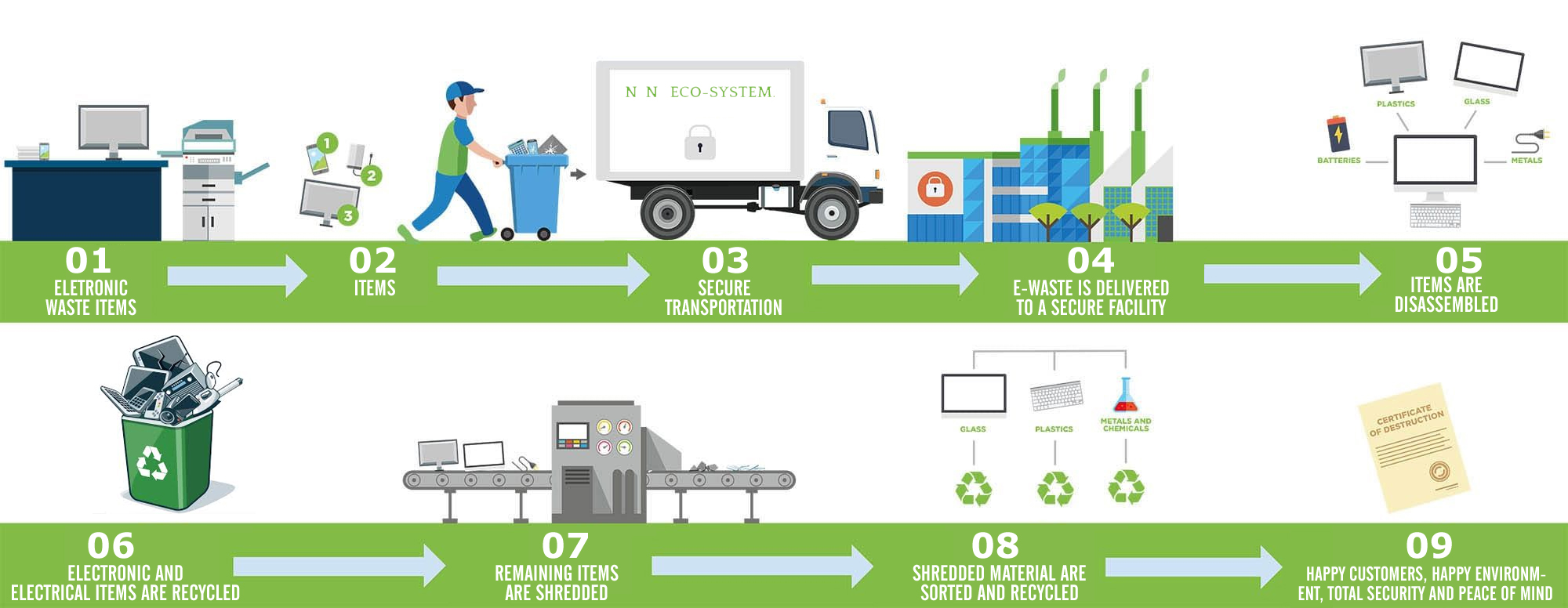
E-WASTE MANAGEMENT
E-waste is defined as “electrical and electronic equipment, whole or in part discarded as waste by the consumer or bulk consumer as well as rejects from manufacturing, refurbishment and repair processes.
The E-Waste (Management) Rules, 2016 supersede the E-Waste (Management & Handling) Rules of 2011. The rules came into effect in October 2017. As per the mandate, the rules apply to every “manufacturer, producer, consumer, bulk consumer, collection centres, dealers, e-retailer, refurbisher, dismantler and recycler involved in manufacture, sale, transfer, purchase, collection, storage and processing of e-waste or electrical and electronic equipment.
The mandate lists down in detail responsibilities of various stakeholders involved with electronic products from its manufacturing stage to its recycling stage and thereafter.
Click here to Download Implementation Guidelines for E-Waste (Management) Rules 2016 issued by CPCB
The main responsibilities of Producers under the new Rule are to:
- Set up a system to implement Extended Producer Responsibility (EPR) with proper means of collection, channelisation and disposal of end-of-life e-waste in accordance with a Central Pollution Control Board (CPCB) approved EPRAuthorisation plan.
- Spread awareness regarding appropriate contact avenues (addresses, emails, telephone numbers, etc.) for information regarding proper handling of the e-waste, hazardous constituents, hazards of improper management and disposal of e-waste and means available to consumers for return and recycling of their e-waste.
The EPRAuthorisation plan should constitute of a collection scheme of the e-waste placed on the market, through means such as ‘buy-back arrangements, exchange schemes, Deposit Refund System, etc’ and direct it, whether directly or through authorised agencies (such as Producer Responsibility Organisations) to registered recyclers.
Failure to comply with these regulations can result in severe penalisation. Under Chapter III, Section 13(iv), ‘in the event of refusal of Extended Producer ResponsibilityAuthorisation by the Central Pollution Control Board, the producer will forfeit his right to put any Electrical and Electronic Equipment in the market till such time the Extended Producer Responsibility - Authorisation is granted.
In addition to this, Section 7 of Chapter II states that “Operation without Extended Producer Responsibility-Authorisation by any producer… shall be considered as causing damage to the environment. This is in direct violation of Section 15 of the Environment (Protection) Act, 1986. The penalty for such a contravention is imprisonment for up to five years (can be extended to seven years in case of continued contravention) and heavy fines.
There are two types of EPR models available to producers:
- Individual Producer Responsibility (IPR) : In an IPR, Producers are responsible for setting up appropriate systems for complying with their respective EPR obligations.
- Collective Producer Responsibility(CPR) : In a CPR, producers cover their responsibilities via Producer Responsibility Organisations (PRO) or any other agency which facilitates the collective handling of the waste by pooling in their resources which results in cost effective EPR compliance.
IPR v. CPR systems
| Key Area | Individual Producer Responsibility | Collective Producer Responsibility |
|---|---|---|
| Collection and Storage | More resource intensive | Less resource intensive. The PRO coordinates all the collection and channelization of the e-waste. |
| Reporting and Monitoring | Each producer is responsible for their own reporting on collection and monitoring of the e-waste of their respective brands. | PRO takes care of end to end reporting and monitoring for member brands, manufacturers and prepares reports for EPR compliance |
| Awareness & Capacity | Each producer has to deal with their own set of vendors and recyclers | A PRO can organize common awareness and capacity building sessions for all the brands of e-waste. All personnel and staff dealing with Operations can be trained together. |
| Recycling | Each producer has to deal with their own set of vendors and recyclers | The PRO chooses the recyclers based on the best practices and standards and is responsible for the auditing and reporting with the recyclers. |
The E-Waste (Management) Rules, 2016 define a PRO as follows: ‘Producer Responsibility Organisation’ means a professional organisation authorised or financed collectively or individually by producers, which can take the responsibility for collection and channelisation of e-waste generated from the ‘end-of-life’ of their products to ensure environmentally sound management of such e-waste.’
A PRO typically provides the following services:
- Establishing and operating collection points
- Holding awareness workshops for related stakeholders
- Pick up and transport of the waste products to the recycling and treatment facilities
- Organising the treatment and reporting the results to the authorities
The PROs further contract with collection site providers (municipalities, retailers and waste management businesses for B2B and/or B2C products), recyclers and logistics partners to carry out the EPR functions.
© Copyright 2019 N. N. Eco System. All Rights Reserved